Wednesday, January 07, 2009

Pissaladiere - Almost


I had Provence on my mind.

That led me to pissaladiere.

I tried making some.

It was somewhat difficult to be true to Nicoise tradition when I had only 4 olives and 2 anchovy fillets.

So I chopped up the olives instead of using them whole.

I then mashed the anchovies to a paste.

Voila - pissalat, minus the herbs.

Just so the pissaladiere won't look too dull I added cherry tomatoes, blanched and skinned.

Then, I thought why not some sun-dried tomatoes as well.

To take things a bit further, I spread tomato paste on the dough with the "pissalat" before heaping on the fried onions, tomatoes and olives and some grated parmesan.

Hmmm - maybe I made pizza instead!

In any case, it was a delicious lunch eaten with some carrots left over from dinner.


Sister Number 2 and 5 were the beneficiaries of this pissaladiere experiment.


Friday, January 02, 2009

Leftovers

Some people like to turn leftovers into new dishes.

I like to eat them mostly as is.

All that's needed is a bit of display skill.


My Christmas dinner tasted just as yummy the day after.

Virginia ham with honey and pineapple glaze, apple sauce, cranberry, pineapple and ginger chutney, salad, steamed pumpkin and mashed potato.

All home-made.

Strictly speaking, the pumpkin was not from Christmas.

I had steamed it 2 or 3 days earlier for lunch.

But it did kind of go with the Christmas theme.

So there you go, leftovers that look good and taste even better.

Sunday, October 19, 2008

Fresh Pasta

Nothing beats fresh pasta for a quick lunch.


Just about 10 minutes' work in the kitchen is all that's needed.

Cook some prawns in a little water.

Blanch some bean sprouts and vegetables in another pot.

Set vegetables aside and bring the water back to a boil.

While the water is boiling, pour some ketchup and chili sauce on a plate.

Add a few drops of sesame oil, a pinch of pepper and sugar, some cut chili and the juice of one lime.


Put one portion of fresh mee bok into the boiling water, turn off the heat immediately.

Remove the mee bok from the pot and put it under a running tap for a few seconds.

Return the noodles to the pot to warm up for a few seconds in the hot water.

Drain and put noodles onto the plate with the sauce, add bean sprouts and a few spoons of the liquid from the prawns, mix.

Pile on the vegetables and prawns.

Add chopped spring onions, cilantro and chilies.

Serve immediately for a simply scrumptious lunch. 


Saturday, September 27, 2008

Microwave Egg

Conventional wisdom has it that eggs in their shell should never be microwaved, unless you want a big splat and some mighty cleaning up.

Sister Number 5 has found a way to do it without the mess.

Take an egg, let it return to room temperature if it has been in the fridge for a while.

Put the egg in a bowl of hot water.

Place the bowl, uncovered, in the microwave at high for 2 minutes.

Remove the bowl from the oven and let it stand, covered, for 10 minutes.

Voila!


Now isn't that better than any you get at those kaya toast places you find everywhere?

Make a sandwich.

Slice some tomatoes.

Steam some maize.


What a lovely lunch!

Tuesday, May 01, 2007

Jam in My Head

Cooking shows on TV can be most annoying.

They show you luscious pictures of the most delicious food.

Then you just can't get those images out of your head.

So you have no choice but to try to replicate what you saw.

The one shot that stayed in my head all week was that of a pan of apple jam.

All the cook did was to throw apple into the pan, add sugar and cinnamon and five seconds later jam of the deepest amber appeared.

Well, in the real world, making apple jam is not that easy.

It takes a bit more effort but it's well worth it.


I made mine with Granny Smith apples, brown sugar, lemon rind and juice, ginger and cloves.

It was way past midnight by the time I got everything ready.

So instead of staying up all night stirring jam, I put the whole pot in the fridge.

As it turned out, that was probably a good thing.

The sugar melted and juice came out of the apple so that by morning I had a soupy mixture ready for the long road to sticky success.


So while I had breakfast and watched more TV, the pot of apple soup bubbled away on the stove.

If you plan to follow my example, be sure to give the pot a good stir each time there is a commercial break.

This will pre-empt any tendency for the apple to stick to the pan.

After about an hour, the soup started to look more like it was going to turn into a sticky caramel.


It occurred to me that biting into the cloves wouldn't be very nice when all I want is sweet, fragrant jam on toast.

The thing to do then is to pick out all the cloves with a pair of chopsticks.

Once that's done, it's time to stop watching TV and turn all your attention to the pot.

It's now non-stop stirring till all the moisture is gone and the apple is a glorious sticky amber jam.

I had enough to fill three regular jam jars plus a small one.

Here's what you need to make Fen's Apple Jam.

10 Granny Smith apples, pared and cut into thick slices

2 and a half pounds brown sugar

Juice and rind of 2 lemons

A 2-inch knob of ginger, julienned

About 15 cloves


Once the jam is done, let it cool in the pot.

Sterilise some clean jam jars by boiling them for about 5 minutes.

When the jars are dry fill them with the jam.


Spread the jam on home-made wholemeal bread for breakfast.

Or serve it with roast chicken or nasi bryani for dinner.

I don't know how long the jam can be kept.

But I am sure it will all be eaten long before any mould has a chance to grow.

Saturday, April 21, 2007

Instant Gratification

When hunger strikes, even the health conscious could succumb to the lure of fast food.


Instant noodles - the new fat-free variety - are just the ticket.

No fat, no cholesterol, no preservatives, no colouring.

They are steamed and air-dried, not fried.

They don't come with seasoning.

So you have to make your own.

Try mushrooms.

Fresh shitake and portobello sauteed with garlic and oyster sauce.

Toss the cooked noodles with some ketchup, chili sauce and sesame oil.

Top that with the mushrooms and some bok choy.


There you have it - an instant gourmet meal.

Tuesday, January 09, 2007

No Fruit Cake Please


Christmas is a time for fruit cake. The boozy variety, with 12-year-old whiskey grown even older in the bottle.

But the liquor can't mask the sweetness of the fruit cake now deemed too cloying by taste buds accustomed to a low sugar, low fat diet.

The alternative this Christmas - something with much less sugar.

Make a dough in the bread machine, roll it out and fill it with organic dates from Egypt and home-made marzipan.


After allowing the ring to rise for about 20 minutes, bake it in the oven for 35 minutes at 180 degrees.

When it's done, let it cool and decorate it with icing sugar.

Some plastic reindeer and fake holly wouldn't be out of place.


No one missed the fruit cake.

Maybe because there was also carrot cake with cream cheese icing.

And a drunken reindeer in the corner.


Nephew Number 3 says that's Rudolph with his nose all red from one drink too many.

Perhaps it was the whiskey saved from the fruit cake that never was.

Tuesday, December 19, 2006

What's the Beef - Part 2

After I was done cursing the supermarket for sneaking 550 grams of inedible fat in what I thought was 2.74 kilos of prime beef, I was ready to attempt cooking a "traditional English Sunday meal".

You know, the sort that the English supposedly eat after church each Sunday - at least in the imagination of some writers of novels and food magazines.

The first thing is to weigh the meat again. This is important to help determine the time needed to cook the beef if you don't want to end up eating leather.

Since I had thrown out 550 grams of fat, I now had only about 2 kilos of real beef left.

The cookbooks and magazines I have read all seem to agree that to get a medium rare roast it should be cooked for 25 minutes for every 500 grams of meat in a 180 degree oven.

So I calculated I needed to cook the beef for 1 hour and 40 minutes.

This turned out to be not such a good idea.


The beef became more medium than rare.

It would have been better if I had taken it out of the oven at least 10 minutes before the end of the cooking time.

Still, it was easy enough getting to the final product.

Once you have calculated the cooking time, rub the beef with some garlic and freshly ground black pepper.

Then put it on a rack in a baking tray.

You can also put some potatoes in the tray so that they roast in the dripping from the beef.

There will be plenty of dripping.

That's more fat.

You may have cut off the visible extra fat - 550 grams in this case - but there will still be plenty that will come dripping out as the meat cooks.

But the potatoes will be happily soaking it up and turning into luscious, gleaming mounds of absolutely delicious killers as the beef sizzles away on top.

Cover the beef loosely with some foil to prevent it from turning brown too much too soon.

While the two are cooking, prepare the vegetables and yorkshire pudding.

Yes, yorkshire pudding.

Remember, this is that "traditional" English meal.

All you need is flour, milk, eggs, salt and some of the dripping from the beef.

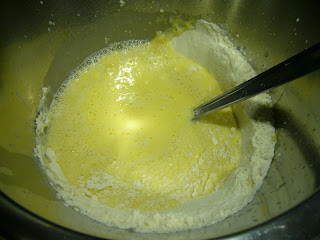
Beat 3 eggs and mix it with 1 and a half pints of milk.

Sift 12 ounces flour and a pinch of salt into a mixing bowl.

Make a well in the flour and gradually beat in the milk and egg mixture to make a smooth batter.

Make sure there are no lumps.


Keep this batter in the fridge till the beef is done.

When the beef is out of the oven, cover it loosely with foil.

Uncover 5 to 10 minutes before the end of the cooking time to let the beef brown.

Let the roast rest for half an hour before serving.

Don't forget the potatoes.

Take them out of the tray and keep them warm.

Then, spoon some dripping into a pan and heat it for 2 minutes in the oven.

I used a 10 x 10 inch pan and also baked some in a muffin tray.


As the batter looked a bit too thick, I added a tablespoon of cold water to it and gave it a good stir before pouring it into the pan.

Bake it for about 20 minutes at 180 degrees.

The yorkshire pudding will puff up into something kind of ugly.


But rest assured, it will be delicious if served immediately with the roast and the potatoes.

Don't forget the vegetables.

I made glazed carrots and buttered broccoli.

And to round off the meal, a Bakewell Tart.

Monday, December 18, 2006

What's the Beef

Plenty, when a joint of prime meat has more than a little extra something that would add to your calorie and cholesterol count.

If you were to buy a 2.74 kilogram piece of roasting beef, how much excess fat would you expect it to have?

100 grams?

200?

Well, I trimmed exactly FIVE HUNDRED AND FIFTY grams of fat off the joint I bought from a supermarket in King Albert Park in Bukit Timah.

For those of you who are not familiar with the area, this supermarket is in the same building as the McDonald's headquarters in Singapore.

The beef was priced at just over $40 dollars per kilogram.

The whole thing cost me about $110.

According to the supermarket then, the inedible, heart-stopping fat was worth about $22.

With a fifth of the "meat" gone, I was left with only 2 kilos of beef to feed 8 people at dinner.

So it was with much regret that I said goodbye to the possibility of roast beef sandwiches for the next day.

Tuesday, November 28, 2006

Breaking Fast

After 8 hours of not eating anything, breaking the fast in the morning with something delicious always makes getting out of bed worthwhile.

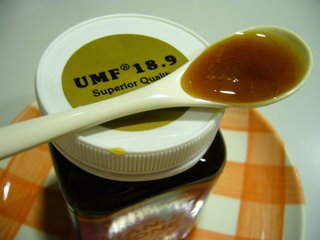
Start with a glass of water followed by a teaspoon of Manuka honey.


Make sure it has a UMF of more than 10.

Let it work its anti-bacterial magic on the empty stomach for half an hour before eating anything.

Take that time to exercise and work up a bigger appetite.

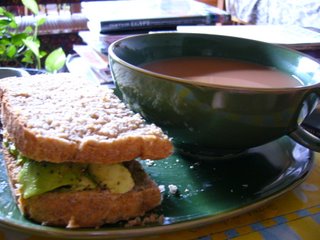
Then have a scrumptious sandwich of avocado and bread homemade with wholemeal flour, wheat germ and a ground organic seed mix.


Let caffeine be the only vice.

Better yet, drink to the good life with a healthful cup of tea.

Wednesday, November 22, 2006

Belly Good Soup

Sometimes, the most expensive cuts of meat or fish may not be the best.

Take salmon.

The fillet and steak cuts look good and cost nearly $20 a kilo.

A whole salmon is cheaper by the kilo in comparison.

That's because quite a bit of the salmon has to be trimmed off to give the fillets and steaks their nice, neat shapes.

And you pay for that "value-add" put in by the supermarket.

But most of the trimmed off bits which you have partially paid for is not thrown away.

The supermarket re-packages that for sale.

Those bits would include the head which comes with part of the flesh next to it, and the tender bits around the gills.

They are delicious in curry (see recipe in "Fit for (A) Rajah", March 2006) or steamed.

But the treasure is the belly.

Strips of it are cut off so that the fillets would not have floppy bits attached to them.

Look for these belly strips which come with loads of smooth, yummy, omega-3 fat.

They are cheaper than the fillets and steaks and regarded by some as cat food.

But don't feed them to your cat.

Make soup for yourself instead.


Put some wolfberries and kelp in a pot of water. Bring to a boil and then let it simmer for about 5 minutes.

Cut the strips of salmon belly into chunks and add them to the soup.

When the salmon is just cooked, lower the heat, add some romaine lettuce and let it wilt in the soup for about 30 seconds.

Turn off the heat. Do not over-cook the fish and lettuce.

Season with salt and freshly ground black pepper.

Serve hot with a slice of buttered, wholemeal bread for a belly-warming meal.

Monday, October 30, 2006

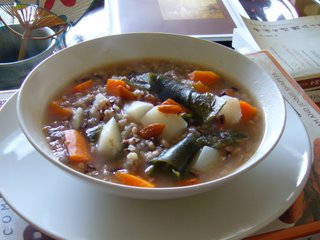
Three-Grain Porridge

Porridge is good after a week of over-eating.

Not the kind made with white rice, no matter how fragrant it is supposed to be.

Something with more fibre, more nutrients, is infinitely more appealing.


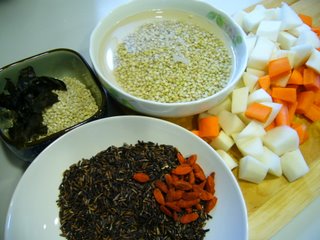
Use kelp for its flavour and minerals. Full of iodine, potassium, magnesium, calcium and iron.

Barley, buckwheat (1) and black rice (2) - not pulot hitam - for carbohydrates, protein, phytonutrients, fibre and other good stuff.

Radish and carrots for more fibre, vitamins and beta-carotene.

Finally some wolfberries to nourish the "yin" and blood, and strengthen the eyes, liver and kidney.

Put everything into a big pot, add water and bring to a boil.

Lower the heat but keep it bubbling so that the grains won't stick to the pot.

Add more water if necessary.

When everything is soft, the porridge is ready.


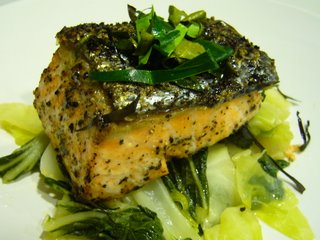
Eat it steaming hot with grilled salmon for a dose of omega-3.

And some steamed cabbage and bok choy for more vitamins and fibre.


Rub the salmon with salt and freshly-ground black pepper. Line a pan with foil.

Place some shredded kaffir lime leaves on the foil, top it with the salmon followed by more leaves.

Place the fish under a grill till the skin is crispy.

When the salmon is done, place it on a bed of steamed vegetables and squeeze some lime juice over it.

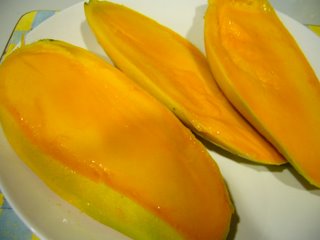
For dessert, have a juicy mango.


It's rich in vitamins A, B and C.

Some people believe it aids digestion and is good for the heart and the brain.


Notes

1] Buckwheat is a fruit seed related to rhubarb and sorrel. Buckwheat flour is used to make Japanese soba. The seed form is available at the dry goods section of NTUC Fairprice Supermarket.

2] I bought the black rice at the basement supermarket in Siam Paragon shopping centre in Bangkok. Yes, I shopped for groceries when I visited Thailand.

Thursday, October 26, 2006

Hum Revisited


After all the sound and fury over that non-order of cockles by the PM (read Mee Siam Mai Hum, 24 August 2006), it's time to contemplate what we can dish up if he had said "ai hum" instead.

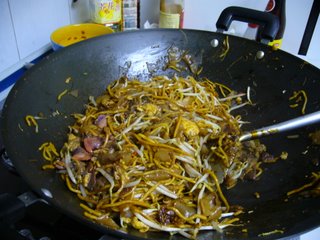
The affirmative could have given him a lip-smacking plate of Char Kway Teow, that artery-clogging noodle dish that many Singaporeans crave, especially when they miss home.

In the days when hepatitis and cholesterol were the concerns of doctors only, and hawkers stayed true to their itinerant calling, Char Kway Teow came with almost-raw cockles, lard croutons and scrambled egg.

Then, as now, you could choose to "mai" (not want) or "ai" (want) hum (cockles), hiam (chili) or neng (egg).

Then, unlike now, the cockles were no big deal. If any fuss was made, it was only to instruct the hawker to cook them ever so lightly.

It was the egg that made the difference.

Mothers would send their children to the Kway Teow man with an egg in hand. A big brown one to replace what was considered the inferior small white-shelled variety favoured by the hawker.

The Char Kway Teow would also be cheaper if the egg came from home.

Nowadays, anyone with the temerity to do such a thing would be thrown out of the queue before stepping within sniffing distance of the hawker's wok.

But you don't have to go to a hawker centre to satisfy your craving. DIY kway teow can be just as good.

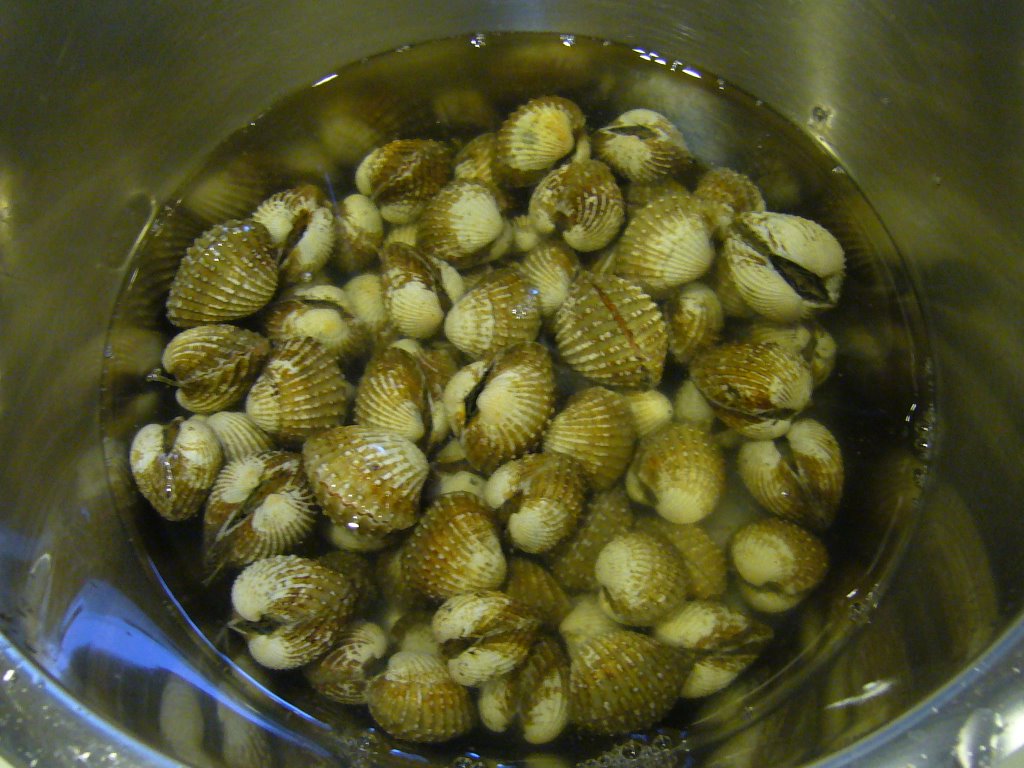
First, prepare the cockles. Scrub them and soak them in water for a minute or two to entice them to open and let out some dirt.

All the fresh, edible ones will open easily when you pull the shells apart. Discard those that don't. Wash each opened cockle individually under a running tap to get rid of any dirt clinging to the flesh. Use a teaspoon to separate the meat from the shell.


Two dollars will get you enough cockles to cook a big batch of kway teow.

Now you are ready to start frying. This is how Nephew Number Two did it.


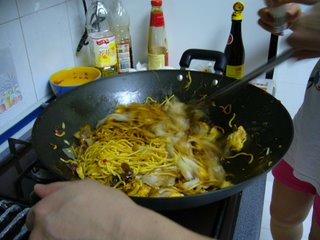
First, heat some oil in a wok, add beaten egg to make an omelette of sorts. Push this to one side of the wok. Add more oil, then some minced garlic and fry till fragrant but not brown. Add kway teow and yellow noodles to the pan, season with sweet sauce (kicap manis), black soya sauce, and chili sauce if you "ai hiam".

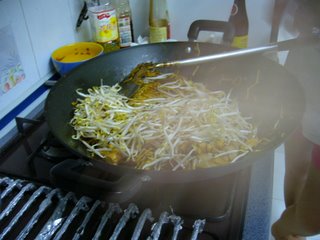
Next add lots of bean sprouts for that healthy touch.


Give the whole thing a thorough stir. Sprinkle some water if the noodles are a bit dry. Adjust the seasoning. Then it's time to add the cockles - and the blood, for more flavour. It's a bit yucky but you won't regret it.


Give the noodles a quick stir and turn off the stove quickly. Do not over-cook the cockles because you want them almost raw for the best texture and taste.


Scoop the noodles into a bowl. Garnish with spring onions and sliced chili. Eat it while it's hot.

Think of what you would have missed if you had said "mai hum".

Tuesday, September 26, 2006

Strawberry Delight


Strawberries are in season - in the supermarket.

Some of them are so plump you would think they have GM inscribed in their genes.

So plump they can be quartered and still look luscious in a bowl of home-made ice-cream.


Strawberries are not my favourite fruit.

They are prickly and always seem to leave a sour aftertaste.

To take the edge off, I like to marinate them in whiskey and brown sugar.

Eat them with yoghurt ice-cream made with strawberries for a double dose of pink.


Strawberry Yoghurt Ice-Cream with Marinated Strawberries


500 gms strawberries, hulled and washed

250 ml plain yoghurt

2 tablespoons sour cream

2 tablespoons lemon juice

80 gms castor sugar

2 tablespoons brown sugar

4 tablespoons whiskey


To make the ice-cream, puree 180 gms of the strawberries with the lemon juice and castor sugar in a blender.

Add the yoghurt and sour cream and blend for a few seconds till everything is mixed.

Pour the mixture into an ice-cream maker and let it work for about 30 minutes.

When the ice-cream is done, transfer it to a box and let it stand in the freezer for about 2 hours before serving.

Next, cut the rest of the strawberries into halves or quarters.

Stir the brown sugar into the whiskey and pour the mixture over the cut strawberries.

Mix well and chill in the fridge.

Let the strawberries marinate for about 45 minutes, stirring them occasionally.

When ready to serve, scoop some ice-cream into a bowl and decorate with the marinated strawberries.

Saturday, September 09, 2006

Steamed Pumpkin Bao

There is more to pumpkin than just pie.

It makes a great filling for Chinese dumpling too.

Organic food shops in Fortune Centre sell delicious wholemeal bao filled with pumpkin.

Here's my version of it.


Make a dough in a bread machine with 5 fluid ounces low fat milk, 8 ounces stone-ground organic wholemeal flour, half teaspoon sugar, half teaspoon salt, half ounce butter and 1 teaspoon dried yeast.

While the dough is rising in the machine, peel and clean a pumpkin and cut it into cubes. Mix 3 teaspoons curry powder with some water to make a paste. Add the curry paste to the pumpkin, stir and cook in a microwave oven for 5 minutes on high. Add salt to taste when it's done.


When the dough is ready, knock it back and divide it into 8 equal portions. Flatten each piece and roll it into a round. Place two teaspoons of pumpkin in the centre of each round of dough. Bring up the sides of the dough to cover the filling and pinch the edges to seal.

Place the buns on a plate, cover with cling film and leave to rise for 30 minutes in a warm place. Remove the cling film and steam the buns for about 15 minutes. Serve hot.

Thursday, August 24, 2006

Mee Siam Mai Hum


Mee Siam Mai Hum

Singaporeans once again showed they are a nation of foodies when they asked collectively on Sunday evening in their broadest Singlish, "Mee Siam got hum meh?"

What caused this puzzlement was their Prime Minister's reference to this favourite rice noodle dish in his annual National Day Rally speech that evening.

This is what he said "live" on national TV.

"You put out a funny podcast. You talk about bak chor mee. I will say mee siam mai hum."

Sms started flying immediately.

"mee siam got hum meh?"

"he mins laksa, rite?"

"char kway teow lah. mee siam where got hum."

"aiyah, shd b mee siam no hiam."

They might well be all correct.

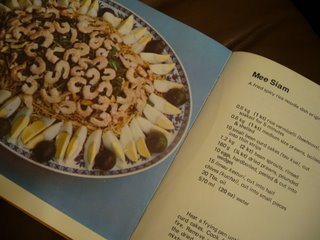
Mee Siam is a spicy rice noodle dish that originated in Thailand - according to non other than Mrs Lee Chin Koon, the grandmother of the Prime Minister, whose recipe for it appears in her cookbook published in December 1974.

A quick check shows cockles or hum as they are called in Hokkien and Cantonese, are not one of the ingredients which include rice vermicelli, prawns, bean curd cake and bean sprouts.

So it couldn't be that Mr Lee remembered telling his grandmother, "no hum please" when offered a bowl of her delicious Mee Siam.

My view is he should have said "hiam" - thick chilli sauce that is sometimes served on the side to add extra kick, for those who like their Mee Siam hot.

Save the "hum" for Laksa or Char Kway Teow.

Or you could eat it only slightly cooked.

Scrub the cockles to get rid of the mud sticking to them.

Soak them in cool tap water for a few minutes.

When they open, wash away any dirt sticking to the flesh.

Pour boiling water over the cockles and let them stand for two to three minutes.

Pour away the water, remove the flesh from the shells and dip it in chilli sauce for a delicious bloody treat.

Another way is to marinate the cleaned raw cockles in thick black soya sauce. Add some sliced fresh chillies to the sauce and let the cockles steep for about an hour. Pour away the sauce, open the cockles and feast.

Nowadays, eating cockles this way would be like playing Russian roulette, what with the threat of Hepatitis hanging over our heads.

So it might well be prudent to follow the Prime Minister's advice and say "mai hum".

Sunday, July 16, 2006

Wonder Bread

I used to bake bread the old-fashioned way.

Mix. Knead. Rise. Knock back. Rise again. Bake.

A lot of hard work.

Delicious results.

Now the bread machine does it all. At least the more tedious bits. And at a faster speed too.

The loaves always turn out looking great and tasting even better.

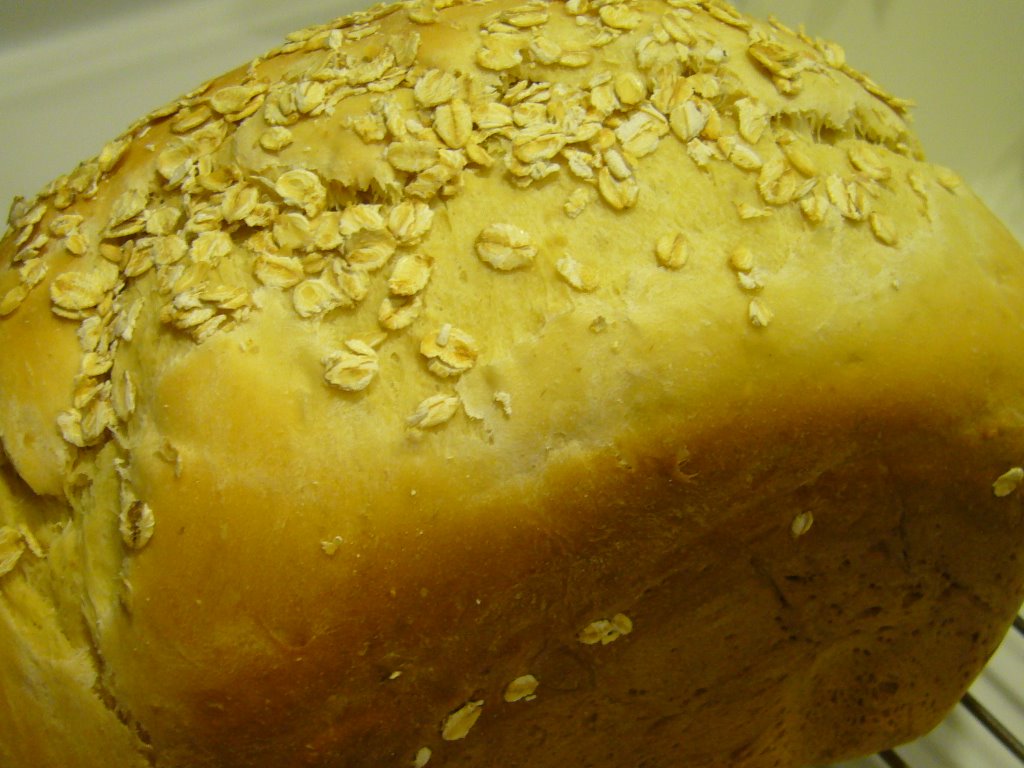
Egg Loaf with Rolled Oats


This is a 1 kilo white loaf with two eggs and 3 ounces of rolled oats added for extra taste and crunch.

All I did was put the ingredients in the machine and press start.

I topped it with more rolled oats just before the bake function kicked in.

A little more work and this is the result.

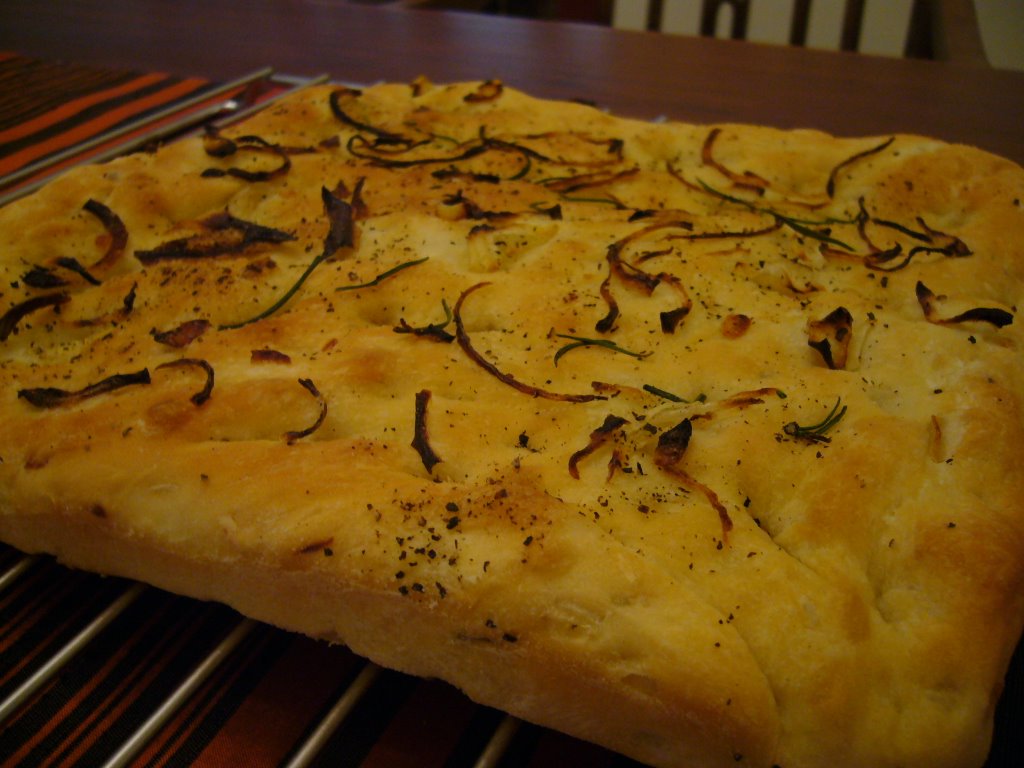
Onion Focaccia


There's onion on top and onion inside.

And rosemary too. Home-grown.

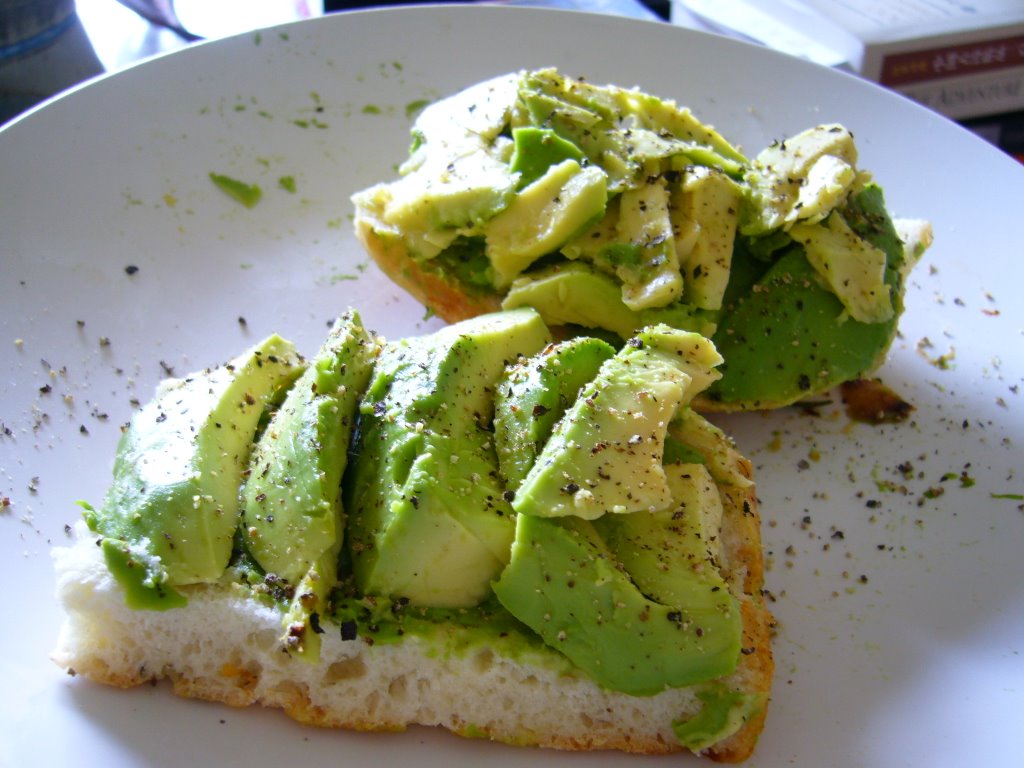
Slice it.

Top it with ripe avocado.

Drizzle with extra virgin olive oil.

Add a dash of black pepper.

Lunch.

Focaccia with Avocado


Yummy to the last crumb.

Saturday, May 13, 2006

Mushroom Mania


From Button to Portobello to Shitake and more. They are all there for the picking. It's enough to infect any occasional epicure with mushroom mania.

That wondrous hoard of juicy mushrooms can be found, not in some wooded field in a faraway land but right in the heart of Bukit Panjang at the NTUC Fairprice.

My pick, a punnet of Cremini for $3.20 and another of Portobello for $3.50.

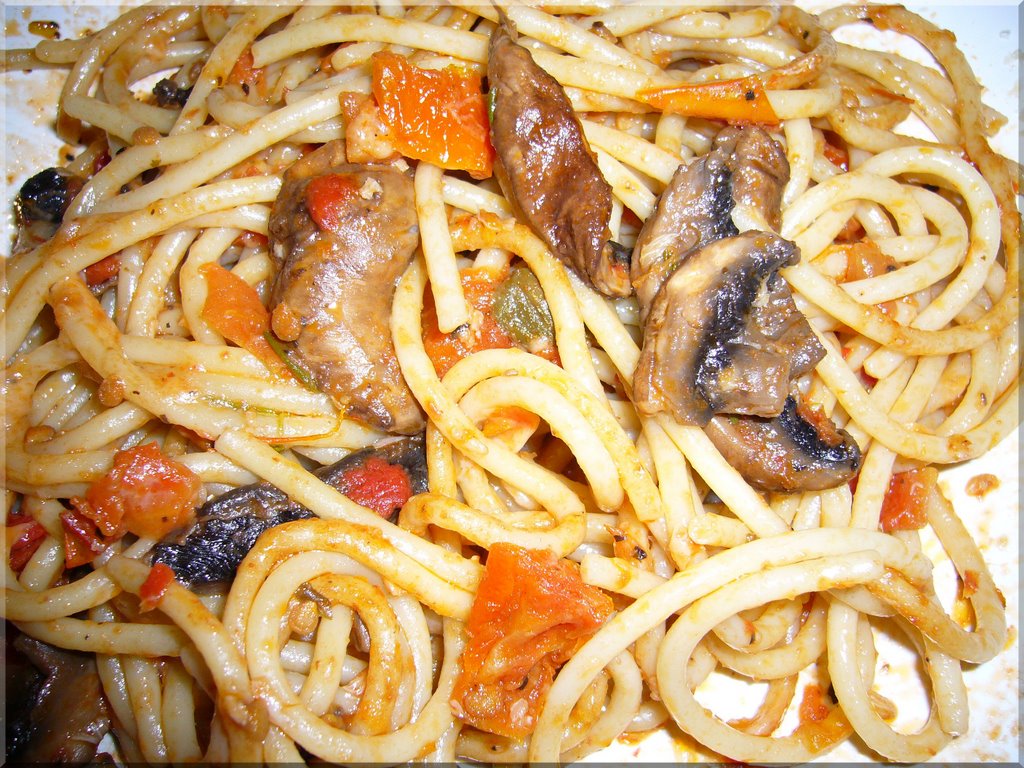
Here's what I made with them for lunch.

Cremini and Portobello Spaghetti with Sun-dried Tomatoes

5 Cremini and 5 Portobello sliced
4 cloves garlic minced
2 teaspoons capers (salt washed off)
1 anchovy mashed
2 teaspoons tomato paste
2 medium tomatoes diced
10 slices sun-dried tomatoes chopped
1 teaspoon fresh rosemary
200 gms spaghetti
1 tablespoon extra virgin olive oil
salt and pepper and parmesan to taste

Cook the spaghetti in salted water for about 8 minutes till al dente. Drain and keep the spaghetti warm. Set aside some of the water.

Fry garlic in olive oil for a minute, add tomatoes and let it cook for about 5 minutes. Stir in tomato paste, sun-dried tomatoes and capers. Add mushrooms and cook for about 2 minutes. Add the anchovy, rosemary, and salt and pepper to taste. Add the spaghetti to the sauce, stir and turn off the heat. If the mixture is dry, add a few spoons of the spaghetti water. Divide into plates, grate parmesan over the spaghetti and serve immediately.

I also made soup to go with the spaghetti.

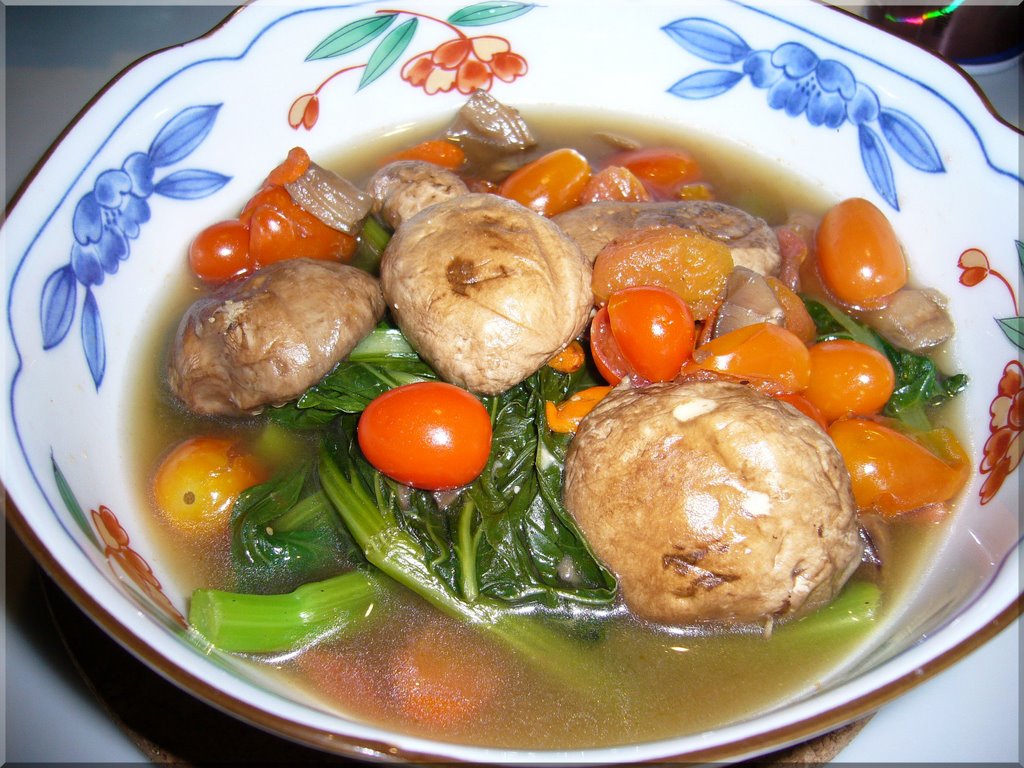
Mushroom soup with Baby Cai Xin, Cherry Tomatoes and Wolfberries

3 Cremini
3 Portobello
100 gms Baby Cai Xin
10 Cherry Tomatoes
A handful of Wolfberries
2 Cups water
1 teaspoon white Miso
A few drops Sesame Oil
A dash of Pepper

Add Wolfberries and Cherry Tomatoes to the water and bring to a boil. Simmer for about 5 minutes. Add mushrooms and bring to a boil again. Then add Cai Xin and boil for a minute. Dissolve Miso in the soup, turn off the heat and add sesame oil and pepper.
Transfer soup to a bowl and serve hot.

Friday, April 14, 2006

Tea For Two (Hundred and Seventy)

More than 270 people took tea with the PAP(1). Not all at once. Individually, it would seem.

Some of those invited have now made themselves known to the public. They have passed the "tea test". They are the "new candidates" in their brand new Party whites (2). 24 in all.

There were questions aplenty when they met reporters to introduce themselves as candidates for the coming general election. In reply, everyone of them said they wanted to serve the people, give something back to society.

But no one talked about those tea sessions. What did the PAP serve? No one asked and none volunteered any information.

Those who made it to the final round could well have been invited to the Istana (3) where the hosts are justly proud of their special blend of Chinese tea. It's a smoky Lychee. Fragrant and smooth.

The chefs there do a rather good Sago Pudding with Gula Melaka (4) too. It's their signature dessert. The sago is springy, the coconut milk just the right degree of lemak (5), with the Gula Melaka rounding it off on a sweet note.

Lychee tea and Sago Pudding. Not quite right for a political talk-fest.

Teh Halia would be better. Ginger tea. Just the thing to get rid of all the hot air.

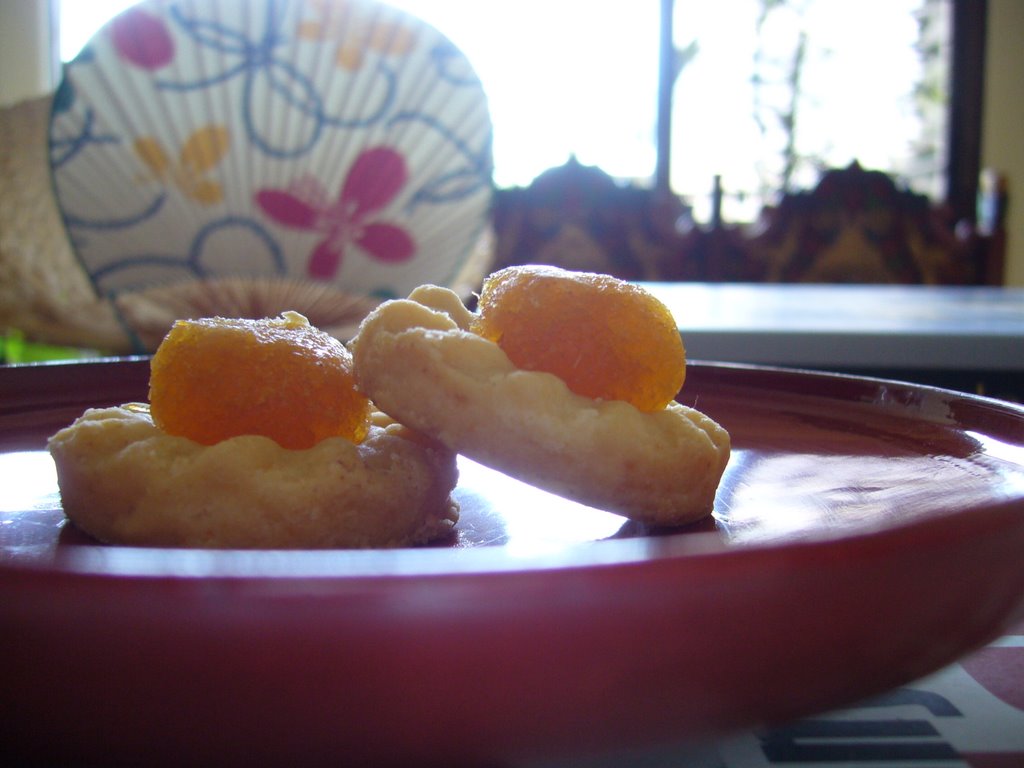
Then some pineapple tarts. The sweet that signals happy times at Hari Raya, Lunar New Year, Deepavali and Christmas (6). A reminder to those at tea of the people they will serve.
To make Teh Halia, take a palm-sized piece of ginger, scrape off the skin, bruise it with the flat of a chopper and boil it for about 20 minutes. Remove the ginger and use the water to make tea. Add condensed milk to taste. For those who prefer tea without sugar, try Teh C Halia Kosong (7) with evaporated milk instead of the condensed variety.

The pineapple tarts would be a bit more work.

Rub 4 ounces butter into 8 ounces flour, stir in 1 tablespoon icing sugar. Bind the mixture with one egg yolk and just enough cold water to form a dough. Wrap the dough in cling film and chill it in the fridge for an hour.

Peel and grate two pineapples, drain and set aside the excess juice (drink it), add some sugar to the pineapple and cook it over low heat, stirring continuously till it forms a jam.

Remove the dough from the fridge. Roll it on a lightly floured surface to the desired thickness and cut into small rounds with a cookie cutter. Spoon some of the pineapple jam on each pastry round, arrange the tarts on a tray and bake for about 20 minutes at 180 degrees C.

A simpler way would be to buy the tarts. Try the cake stall run by a friendly couple on the top-floor food centre at Beauty World in Bukit Timah (8). A jar sells for about $8.50.

So yummy and not a bit of work. Then everyone will have more time to talk about how to make this country a better place for all.


Notes

1 The People's Action Party or PAP is the political party which has governed Singapore since 1959. It assesses potential election candidates at tea with Party leaders.

2 PAP members wear all-white at Party functions.

3 The Istana is the official residence of the President of Singapore. It is also the place where the country's Prime Minister, Senior Minister and Minister Mentor have their offices.

4 Sago is made from tapioca. The dessert is served with coconut milk and a thick syrup made from palm sugar known locally as Gula Melaka.

5 A Malay word used to describe the consistency of a sauce or gravy made with coconut milk.

6 The main festivals of the Malays, Chinese, Indians and Eurasians, the four main ethnic groups that make up the population of Singapore. The pineapple tart is one festive tidbit common to all four groups.

7 Literally, Tea Carnation Ginger Zero. Tea made with Carnation Milk, a popular brand of evaporated milk, and ginger. Zero denotes without sugar.

8 A shopping centre in the western part of Singapore.

Wednesday, March 15, 2006

And Baby Makes Four


A baby is on the way.

It will be the fourth in four years.

Its nursery is just outside my bedroom.

On the balcony.

Now what mother would put her baby on a balcony, you might ask. But if the mother's a bird, a sunny balcony is as good a place as any.

The first time a pair of birds built a nest on my balcony was in 2003. They had visited every day for a few weeks to check out the place.

Then bit by bit, fluff, twigs and leaves appeared in a cluster on a branch of one of my plants.

What looked like rubbish blown in by the wind eventually turned into an egg-shaped nest with an opening on one side.

One day, the singing of the proud parents was answered by a softer cry.

And there they were, two little babies with their mouths wide open waiting to be fed.

I came home one evening, several weeks later, to find the nest smashed, destroyed by strong winds whipped up in an afternoon storm.

They were gone.

The same thing happened in 2004.

The pair built another nest at the same spot.

This time, only one baby.

Then another storm; and so goodbye.

Last year, their nest was destroyed by strong winds before they managed to lay any eggs.

Now I wait with bated breath.

I hope they succeed.

If they do, I will be ready to celebrate in time-honoured tradition with a pot of vinegared pig's trotters.

Just like how every Cantonese household used to when there was a birth in the family.

A pot of vinegared pig's trotters, with lots of ginger to help the new mother get rid of any wind in her tummy.

The last time my mother made the same dish was when my sister-in-law gave birth to my nephews many years ago.

The recipe was lost when my mother died.

Now, my sister has devised her own version using leaner meat.

It's a slightly healthier version, but no less delicious than what our mother cooked.

To make Sister Number Two's Vinegared Pig's Trotters, you will need:

1 pig's trotter and lean meat from 2 legs (ask the butcher to chop them up)
1 big bottle of black vinegar (best grade)
1 bottle of water (measure using the vinegar bottle)
1 tablespoon sesame oil
250 gms black sugar
500 to 600 gms ginger
10 shelled hard boiled eggs
salt to taste

Clean the trotter. Blanch it and the lean meat in hot water for a few minutes to get rid of any scum and porky smell. Cut the meat into chunks.

Scrape the ginger, cut it into big pieces and smash them to release the juice.

Heat a non-stick pan, fry the pork till quite dry. Set the pork aside.

Heat the non-stick pan again and put in the ginger, fry till quite dry.

Add the sesame oil and the pork. Fry.

Put the meat and ginger in a heavy-bottomed pot (do not use metal containers).

Add the vinegar. Fill the vinegar bottle with water and pour this into the pot.

Add the black sugar.

Bring the pot to a boil, then simmer till the meat is tender and almost falling off the bone (about 30 - 40 minutes).

Add the hard boiled eggs and bring to a boil again.

Add salt to taste.

The end result should be like pork in soup.

It can be eaten immediately but would taste better if kept in the fridge for a few days.

You can double the recipe, eat some and keep the rest to eat over several days.

Make good use of old glass jam/coffee bottles to store the end product.

It will keep for more than a month in the fridge.

But it won't be easy to pour the vinegar out of glass bottles as it turns into a gelatine once you put it in the fridge.

When you are ready to eat it, heat the bottle in a microwave oven (1 minute, High).

Then you can easily pour the vinegared pork into a pot to re-heat and serve.